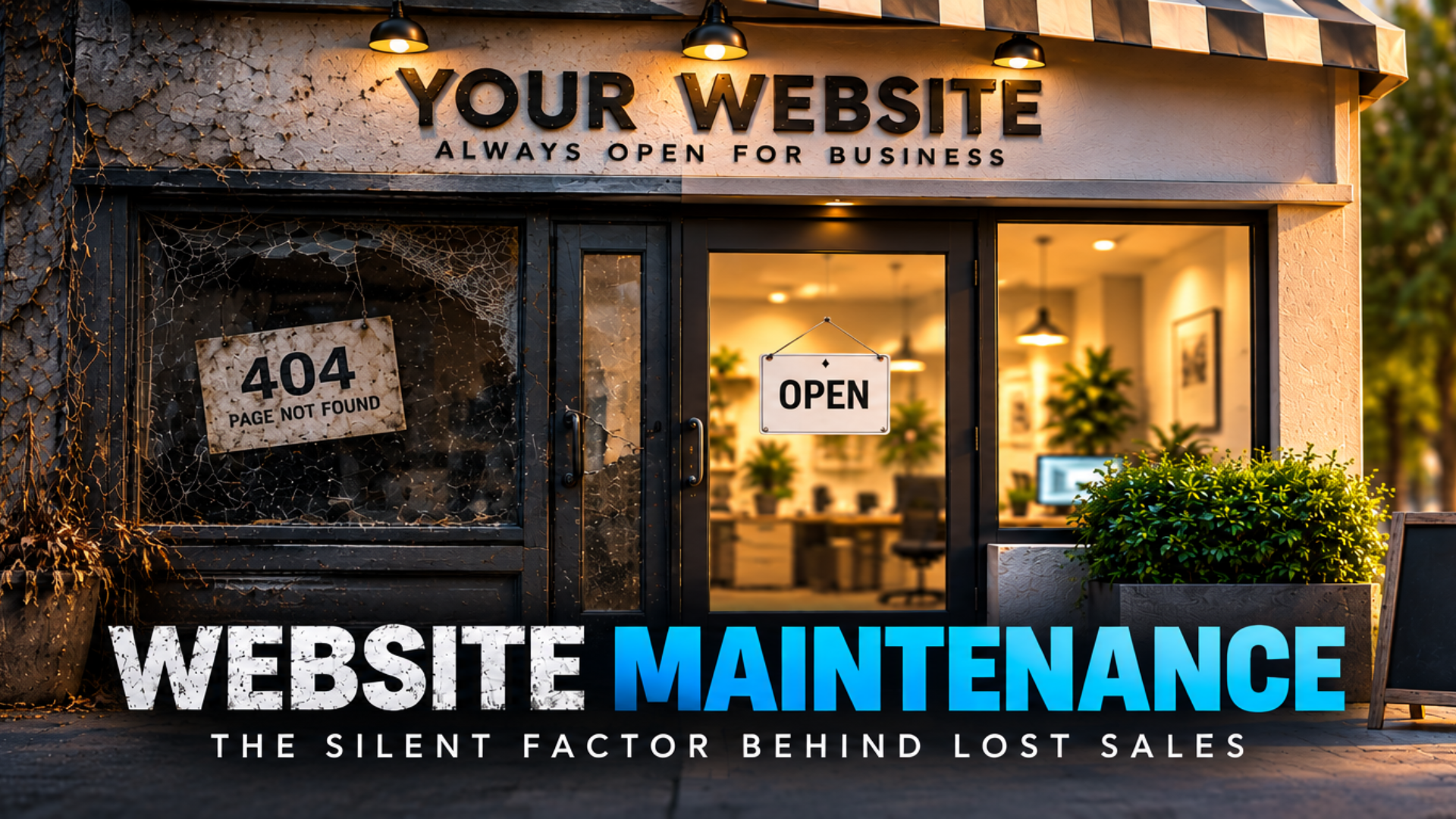
Most organizations think about their website twice: once when it’s built, and once when it feels embarrassingly outdated and it’s time to start over. Everything in between the two, three, sometimes five years the site just runs gets almost no attention at all.
That gap is where sales quietly go missing. A website doesn’t need a redesign to stop performing. It just needs to be left alone long enough. Plugins fall out of date. Links break as other companies update their own sites. A security certificate expires without anyone noticing until a visitor sees a warning. None of these are dramatic failures they’re small, silent erosions that add up to a website that looks the same on the surface but sells noticeably less underneath.
Here’s how neglected maintenance quietly costs sales, one gap at a time.
Gap #1: Broken Links and Dead Pages Turn Interested Buyers Away
A visitor clicks “View Our Services” and lands on a 404 error page. It takes one click for a business to look unreliable and most owners have no idea it’s happening, because they never click through their own site the way a new visitor does.
Links break constantly and invisibly: a partner’s website restructures, a file gets renamed during an update, a page gets deleted without redirecting the old URL. Over a year or two, even a well-built site can accumulate dozens of dead links without a single alert going off. A routine monthly check clicking through the site’s key paths and running an automated link scan catches these before a visitor does.
Gap #2. Outdated Software Slows Everything Down
Most websites today run on a content management system with dozens of underlying plugins and themes, each updated regularly by its developer to fix bugs, patch security holes, and improve performance. Skip those updates for a year, and the site doesn’t just fall behind on features; it gets measurably slower and more prone to conflicts that cause pages to load incorrectly or break entirely on certain devices.
Speed isn’t a cosmetic issue. It’s directly tied to how many visitors stay long enough to convert. A site that ran fast at launch can quietly slow down over time purely from accumulated, unmaintained code; no redesign required to fix it, just consistent upkeep.
Gap #3. An Expired Security Certificate Ends the Conversation Instantly
If your SSL certificate lapses, browsers don’t quietly note it they interrupt the visitor with a full-page warning that says the site is “Not Secure,” sometimes with red text and a stop sign. No one continues past that screen to fill out a form. It doesn’t matter how good your offer is; the browser itself is telling the visitor to leave.
SSL certificates typically need renewal, and while many hosting setups now auto-renew, the ones that don’t fail silently until exactly the wrong moment. This is one of the simplest maintenance items to check and one of the most damaging to miss.
Gap #4. Old Contente Quietly Signals “Nobody’s Home”
A “Latest News” section with a post from two years ago. A pricing page referencing a promotion that ended last spring. A sermon archive that stopped updating in January. None of these will crash a website, but each one sends the same quiet message to a visitor: this organization isn’t actively paying attention.
That signal matters more than most owners realize, because trust is built on small, almost unconscious cues. A visitor comparing two similar organizations will often choose the one that simply feels more current not because the outdated one is worse at what they do, but because “current” reads as “active” and “active” reads as “reliable.”
Gap #5. Downtime at the Wrong Moment Is a Lost Sale, Full Stop
Every website goes down occasionally: a server issue, a hosting migration, an update gone wrong. What separates a minor blip from a real problem is how quickly it’s caught and fixed. Without active monitoring, a site can be down for hours, even days, before anyone at the organization notices — because the people who’d notice first are outside visitors, not staff who rarely visit their own homepage.
A visitor who lands on a site that’s down doesn’t wait around or try again later. They move to the next search result. There is no recovering that specific visit; the only real defense is uptime monitoring that catches the problem within minutes, not days.
The Bottom Line
None of these five gaps require a redesign to prevent them. They require ongoing attention the same kind of attention a physical storefront gets when someone sweeps the entrance, fixes a flickering sign, or replaces a torn awning. A website is no different. It needs regular, unglamorous upkeep to keep doing the job it was built for.
The organizations that treat maintenance as optional are the ones whose “salesperson” quietly stops showing up for work, one broken link and one missed update at a time. The ones that don’t are the ones whose website keeps performing exactly as well five years in as it did on launch day.
No Limits Media’s Website Maintenance service handles exactly this: monitored uptime, managed updates, link and security checks, and content freshness reviews so your site stays a working salesperson instead of a slowly fading one.
CALLOUT BOX 1 (Quick Fix):
Quick Fix: Click through your own website’s top five pages right now, the way a new visitor would. Note every broken link, outdated reference, or slow-loading page you find that list is your starting point.
CALLOUT BOX 2 (Stat):
A one-second increase in page load time can reduce conversions by more than 7%, and load times creep up gradually as unmaintained sites accumulate outdated code.
CALLOUT BOX 3 (Example — “What a Good Follow-Up System Looks Like”):
Automated uptime monitoring that alerts a real person within minutes of any outage. Monthly software and plugin updates applied on a schedule, not an afterthought. Quarterly link and content audits. SSL renewal tracked before it ever lapses. That’s the standard No Limits Media maintenance plans are built around.
CALLOUT BOX 4 (CTA):
Not sure when your site was last checked for these five gaps? Request a free Website Health Check at nolimitsmedia.com.